Textiles & Bedding
Choosing an Organic Flax Duvet Cover: Closures, Fit, and Care
A duvet cover is both the quietest layer in a bedroom and one of its most hardworking. When it is made from organic flax linen, the appeal is tactile and practical: a naturally textured surface, easygoing drape, and a fabric that can feel at home in every season. The right choice, however, depends on details that are easy to overlook in a photograph—how the cover closes, whether its dimensions suit your insert, and what care the cloth expects.
Published November 18, 2026
Think of a duvet cover as a tailored shell rather than a decorative afterthought. It protects the insert, makes laundering more manageable, and sets the bed’s visual mood. In linen, that mood is often relaxed but considered: the surface catches light unevenly, the weave has a subtle presence, and creases belong to the fabric’s character rather than appearing as a flaw to be pressed away.
“Organic flax duvet cover” describes more than a look. Flax is the plant from which linen is made; organic certification relates to how the fiber is grown and, depending on the standard, how it is processed and handled. Yet a label alone cannot tell you whether a cover will fit your duvet or whether its fastenings will suit your routine. A thoughtful comparison begins with construction.
Start with the insert, not the label
Before comparing colors, finishes, or weave descriptions, measure the duvet insert you actually own. Bedding sizes are not perfectly uniform between brands or countries, and a familiar label such as queen or king is not a substitute for dimensions. Measure the insert flat, from edge to edge, and note both width and length. Then compare those figures with the finished measurements of the cover.
A close match generally helps the insert fill the cover evenly. If the cover is substantially larger, the duvet may shift, gather at the bottom, or leave loose corners. If the cover is smaller, it can compress the fill and make the bed feel less lofty. Small differences may be intentional: a generously cut cover can create a softer, more fluid outline, while a closer fit can look neat and tailored. What matters is knowing the measurements before deciding which effect you prefer.
- Measure the insert itself. Do not rely only on the size printed on its tag.
- Check the cover’s finished dimensions. Confirm both width and length, and look for notes about expected variation.
- Consider loft and fill. A very lofty insert may occupy more of the cover than a lightweight one with the same nominal measurements.
- Check the bed as well. The duvet’s overhang is a styling choice, but it should not be confused with whether the cover fits the insert.
With linen, a gently relaxed silhouette can be especially appealing. The cloth’s natural rumple brings movement to a bed, so a cover need not appear perfectly taut to look polished. Still, relaxed should not mean poorly matched. An insert that slides into a heap can interrupt both comfort and the clean lines of the room.
Closures: small hardware, daily consequences
The closure sits at the foot or side of a duvet cover, where it determines how securely the insert stays enclosed and how easy the cover is to remove for washing. Common options include buttons, ties, zippers, and envelope-style openings. None is universally best; the most satisfying choice is the one that balances security, ease, and the character of the design.
Buttons for a familiar, considered finish
Buttons are a classic duvet-cover closure. They are straightforward to understand and can be replaced if one is lost, while their visible line can lend a discreet decorative note. The practical questions are whether the buttons feel securely attached, whether the spacing leaves gaps, and whether the buttonholes are finished cleanly. A closure that opens too easily may let the insert creep out during the night.
Material also matters. Some covers use shell, wood, or other natural-looking buttons; others use conventional materials. Do not assume a button’s appearance tells you how durable it is. If you machine-wash the cover frequently, inspect the care guidance and consider whether the closure needs special handling. Fasten buttons before washing if the maker recommends it, and avoid pulling sharply when opening them.
Internal ties to anchor the corners
Internal ties are small fabric ribbons or loops sewn inside the cover, commonly near the corners. They attach to corresponding loops on the duvet insert and help prevent it from migrating. For anyone who has woken to a bare corner of cover and a bunched insert, these understated ties can make a noticeable difference.
Check how many ties are included and where they are positioned. Four corner ties are common, but some designs include additional attachment points along the sides. More anchor points can help a large or especially lofty duvet remain evenly distributed, though they also add a few moments to the process of changing bedding. If the insert has no loops, ties may still be knotted around suitable corners, but the result depends on the insert’s construction and the tie length.
Zippers and the case for a secure edge
A zipper can create a streamlined closure and make it quick to open or close the cover. Its quality is worth checking: a smooth-running, well-finished zipper is preferable to one that catches fabric or leaves a stiff edge. Look for a protected end or fabric guard that helps keep the zipper pull from rubbing against the duvet or skin. As with any fastening, follow the maker’s laundering instructions; closing the zipper before washing can reduce the chance of snagging other items.
Envelope openings and wraparound designs
An envelope-style opening uses an overlapping fabric panel instead of a row of buttons or a zipper. The result can be visually minimal, but it depends on adequate overlap to keep the insert contained. This format is more familiar on pillowcases than duvet covers, so examine the product description carefully rather than assuming the opening will behave like a fully secured closure. For duvet covers, the combination of a secure opening and internal corner ties is often a useful practical pairing.
Why internal ties deserve a closer look
The closure is only part of the equation. Corner ties solve a different problem: they help hold the duvet in place inside its cover. A cover can fasten perfectly at the bottom and still allow the insert to migrate if there is no way to anchor it. Before purchasing, look for explicit information about internal ties and check whether the duvet itself has loops to receive them.
When making the bed, turn the cover inside out, locate its corners, and tie each point to the corresponding corner of the insert. Then roll or shake the cover back over the duvet, guiding the insert into position before fastening the opening. This simple routine can distribute the fill more evenly and reduce the need to reposition the duvet each morning. Ties should be snug, not cinched so tightly that they distort the corner or strain the stitching.
Some well-made covers use coconut shell buttons and internal ties as part of a considered construction. For example, the embroidered organic linen duvet-cover description in the bedding category specifies both features, as well as an embroidered front and solid back. That kind of information is useful not as a promise of universal performance, but as a reminder to inspect the fastening details alongside the appearance of a textile.
Read the fabric story beyond “linen”
Linen is made from flax fibers, but covers can differ in fiber sourcing, weaving, finishing, and weight. If organic sourcing matters to you, look for a named certification and verify what the claim covers. A certification such as GOTS is a more specific reference than a general statement that a fabric is “natural” or “eco-friendly.” Certification does not answer every question about a product’s complete environmental footprint, but it gives readers a defined standard to investigate.
Geography can also be part of the textile story. A cover may use flax grown in one country and be woven or sewn elsewhere. Clear sourcing information helps distinguish where the raw fiber originates from where the fabric is made. It is better to read those details as separate steps in a supply chain than to treat a single country-of-origin phrase as a complete account of production.
Weave and finish influence the hand of the cloth. A washed or garment-washed finish can give linen a softer, more relaxed feel from the beginning. A denser or heavier construction may feel more substantial; a lighter fabric may drape more freely. Product descriptions sometimes use terms such as “breathable” and “temperature regulating.” These refer to linen’s capacity to allow airflow and handle moisture, but personal comfort also depends on room conditions, the duvet insert, and individual preferences.
Organic flax linen is not automatically identical from one maker to another. Ask about fiber composition, fabric weight where available, finish, and whether the cover is prewashed. These are more useful points of comparison than relying on thread count alone, a measure that does not translate neatly across every linen construction.
Care is part of choosing well
The best care routine is the one specified for the particular cover. Linen can be durable, but it is still a textile with seams, fastenings, dyes, and finishes that deserve sensible treatment. Read the care label before the first wash, especially if the fabric is dyed, embroidered, or finished with decorative details. When instructions differ from general linen advice, follow the product’s own guidance.
- Wash with similar colors. This reduces the risk of color transfer and helps keep pale bedding fresh-looking.
- Choose a gentle cycle where advised. Cold or cool water is often recommended for relaxed linen, but the maker’s instructions take priority.
- Use a mild detergent. Avoid chlorine bleach unless the care label explicitly allows it.
- Do not overload the machine. The fabric needs room to move and rinse thoroughly.
- Dry with restraint. Low heat or line drying can help limit excessive wear and overdrying; remove the cover promptly if tumble drying is permitted.
- Iron only if you wish. Linen’s natural creases are part of its character. If a smoother finish is preferred, use the temperature and moisture guidance on the care label.
Overdrying can make fabric feel harsher and can place unnecessary stress on seams and closures. A practical middle ground is to remove the cover while it is still slightly damp, smooth it by hand, and let it finish drying according to the label. If line drying, spread the fabric evenly and avoid leaving it in harsh direct sun for prolonged periods, particularly when color retention is a concern.
Before laundering, close zippers or fasten buttons if the maker recommends it, and check that ties are not knotted together. Turning a cover inside out can help protect surface details. For an embroidered design, consider using a gentle cycle and a wash bag only if the care guidance permits it; an overly restrictive bag can prevent a large duvet cover from rinsing freely. Separate a cover from items with hooks, rough trims, or zippers that might catch its weave.
Aesthetic choices that earn their place
Once fit and construction are clear, appearance can take the lead. Linen’s appeal is not limited to rustic interiors. In crisp white, it can feel architectural; in softened neutrals, it creates a quiet tonal bed; in a deeper shade, it adds weight without needing a busy pattern. An embroidered front paired with a plain reverse gives a room two different registers: a decorative face for display and a calmer surface for everyday use.
Texture is as important as color. A stone-washed finish tends to read as lived-in, while a smoother surface can look more tailored. Neither should be mistaken for a measure of quality on its own. Consider how the cover will relate to the sheets, pillowcases, and blankets already in the room. A coordinated set can feel composed, but a subtle variation in weave or tone often gives a bed more dimension.
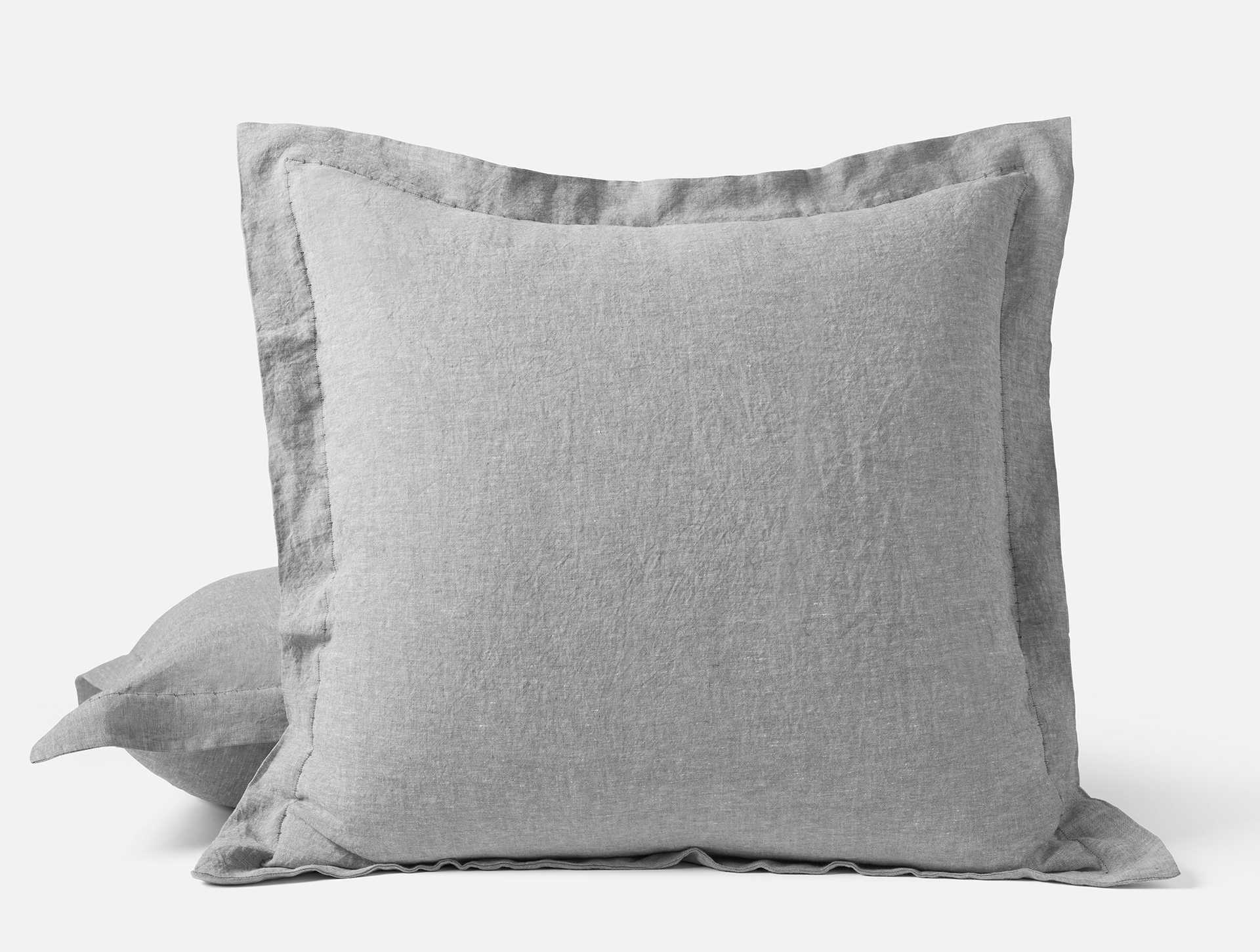
If you are building a layered look, keep the duvet cover as the central textile and add accents selectively. A coordinating sham, such as the Organic Relaxed Linen Sham, is described as organic French linen woven in Portugal and designed to pair with a matching relaxed-linen duvet cover. It is sold as a separate pillow layer, so check sizing and quantities independently when planning a complete arrangement.
A concise checklist before you decide
When comparing an organic linen duvet cover, let the practical details sit alongside the visual ones. A beautiful image may introduce the fabric, but it cannot show whether the insert will stay in place or how the cover will behave after repeated washing. Use the product information to answer a short set of questions:
- Are the cover’s finished dimensions appropriate for your measured duvet insert?
- What type of closure does it use, and is the opening secure enough for your routine?
- Does it include internal ties, and can they attach to the insert?
- Is the fiber composition clearly stated, and is any organic certification named?
- Where was the flax grown, and where was the linen woven or finished?
- Is the fabric prewashed, and what weight or finish information is provided?
- Can you follow the care instructions with the washer and dryer you use?
- Are decorative details, such as embroidery or buttons, compatible with regular laundering?
The most satisfying choice is the one you can live with
An organic flax duvet cover should be judged as a working textile as much as a beautiful one. The right fit lets the insert sit comfortably; considered ties help keep it evenly distributed; a well-made closure makes changing the bed less of a chore. Clear sourcing and care instructions help you understand what you are bringing home and how to look after it.
Then there is the pleasure of the fabric itself: linen’s airy touch, its irregular texture, the way it softens with use and settles into a room without demanding perfection. A cover chosen with attention to construction can retain that ease through ordinary life—sleep, washing, remaking the bed, and the small rituals that make a bedroom feel personal. Look beyond the surface, and the details become part of the design.